For many veteran farmers and ranchers, one of the greatest challenges to building and sustaining a successful agricultural operation is the cost of equipment. Whether purchasing a truck, replacing machinery, acquiring a generator, or securing tools needed for daily operations, these investments can place significant financial pressure on small and beginning farms.
A federal program offers eligible veteran-owned small businesses an opportunity to obtain surplus government equipment at a fraction of the cost of purchasing new equipment.
Established through the Veterans Small Business Enhancement Act of 2018, the Federal Surplus Personal Property Donation Program allows qualifying veteran-owned businesses to access equipment that federal agencies no longer need. The program is administered through the U.S. General Services Administration (GSA), the Small Business Administration (SBA), and participating State Agencies for Surplus Property.
For veteran farmers and ranchers looking to stretch limited resources, this program is worth exploring.
Who Is Eligible?
The program is available to qualifying Veteran-Owned Small Businesses (VOSBs) and Service-Disabled Veteran-Owned Small Businesses (SDVOSBs).
To participate, a business generally must:
- Be at least 51% owned and controlled by one or more eligible veterans.
- Qualify as a small business under SBA requirements.
- Hold an active certification through the SBA’s Veteran Small Business Certification (VetCert) program.
- Operate in a state where it can participate through the State Agency for Surplus Property.
- Use the equipment for legitimate business operations.
Veterans do not have to have a service-connected disability to qualify.
Importantly, military veteran status alone does not establish eligibility. Veteran farmers operating sole proprietorships, partnerships, LLCs, or other business structures should determine whether their operations meet SBA certification requirements.
What Equipment Is Available?
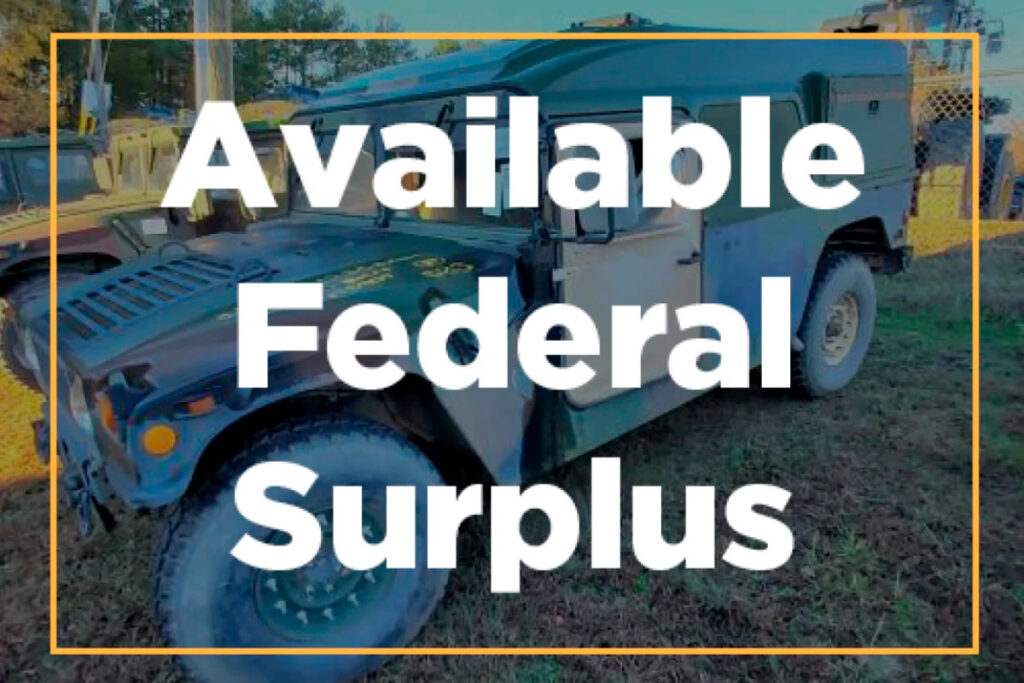
Federal agencies regularly identify equipment and other personal property that is no longer needed for government operations. Eligible property may be transferred through the federal surplus program rather than being sold or disposed of.
Depending on availability, equipment may include:
- Trucks, utility vehicles, and trailers
- Tractors and grounds-maintenance equipment
- Generators and electrical equipment
- Pumps and other water-management equipment
- Construction and material-handling equipment
- Hand tools and maintenance supplies
- Computers, office furniture, and technology
Not every category will be available in every state, and agricultural equipment is not guaranteed. Inventory changes as federal agencies release surplus property.
For a veteran-owned agricultural business, obtaining even one useful piece of equipment could reduce startup expenses, preserve working capital, or improve operational efficiency.
Where Can Veterans Find Equipment?
The program operates nationwide through participating State Agencies for Surplus Property (SASPs).
These agencies determine eligibility, coordinate equipment requests, collect applicable fees, and ensure recipients comply with federal requirements.
Veterans should begin by contacting the surplus property agency in the state where their business operates and where the equipment will be used.
GSA maintains a national directory of state agencies:
Find your State Agency for Surplus Property:
https://www.gsa.gov/sasp
Once approved, businesses can work with their state agency to identify available equipment. Some agencies provide access to search federal surplus inventory directly, while others conduct searches on behalf of approved applicants.
When Can Veterans Apply?
Eligible veteran-owned businesses can pursue participation throughout the year. There is no single nationwide annual application deadline.
However, equipment availability changes regularly, and each state may have its own registration, approval, and renewal procedures.
Veterans interested in the program should begin the certification and registration process before they urgently need equipment.
Early preparation can make it easier to respond when suitable property becomes available.
How Do Veterans Participate?
The process begins with verifying business eligibility and registering with the appropriate state agency.
Step 1: Obtain SBA VetCert Certification
Veteran-owned businesses must first become certified through the SBA’s Veteran Small Business Certification program.
Learn more and begin certification:
https://www.sba.gov/veterans/
Step 2: Contact Your State Surplus Property Agency
After obtaining certification, contact the State Agency for Surplus Property where your business operates.
The agency will explain its registration requirements, required documentation, service fees, and procedures for requesting equipment.
Find your state agency:
https://www.gsa.gov/sasp
Step 3: Identify Available Equipment
Once approved, work with your state agency to search available federal surplus property.
Equipment requests must support the normal business activities of the veteran-owned operation.
Step 4: Review Costs and Equipment Conditions
Although surplus property is made available through a federal donation program, it is not necessarily free.
State agencies generally assess service charges to cover administrative and handling expenses. Recipients may also be responsible for transportation, repairs, and maintenance.
Equipment is typically transferred in its existing condition, without a warranty. Veterans should inspect equipment when possible and evaluate whether the total cost makes financial sense.
Step 5: Put the Equipment to Work
Recipients must use the equipment for approved business purposes and comply with federal and state restrictions.
Equipment generally must be placed into its intended business use within one year. Restrictions also apply to resale, transfer, and disposal.
Why This Matters for Veteran Agriculture
American agriculture is facing significant financial pressures. Rising production expenses, equipment costs, and limited access to affordable capital are making it increasingly difficult for beginning and small-scale farmers to establish and sustain profitable operations.
For veterans entering agriculture, these challenges can be particularly significant.
Access to affordable equipment can make a meaningful difference between postponing an investment and moving forward with an agricultural business.
The Federal Surplus Personal Property Donation Program represents an opportunity for qualifying veteran-owned farms and ranches to strengthen their operations without assuming the full cost of purchasing new equipment.
At Farmer Veteran Coalition, we recognize that building a successful agricultural business requires more than determination. It requires access to practical resources, sound financial decisions, and opportunities that help producers remain competitive.
Veterans have demonstrated their ability to adapt, solve problems, and make the most of available resources. Programs such as this can help translate those strengths into long-term agricultural business success.
The bottom line: If you are a veteran who owns and operates a farm, ranch, or agricultural business, take time to determine whether you qualify for this federal program. A conversation with your state surplus property agency could open the door to equipment that helps your business grow.
Additional Resources
U.S. Small Business Administration — Veteran Business Certification
https://www.sba.gov/veterans/
GSA — State Agencies for Surplus Property Directory
https://www.gsa.gov/sasp
GSA — Federal Surplus Personal Property Donation Program
https://www.gsa.gov/buy-through-us/government-property-for-sale-or-lease/office-of-personal-property-management/for-state-agencies-and-public-organizations
Farmer Veteran Coalition
www.farmvetco.org
Farmer Veteran Coalition is sharing this information to increase awareness of federal resources available to veteran-owned agricultural businesses. Eligibility, equipment availability, service charges, and participation requirements are determined by the responsible federal and state agencies.