Davian McKnight was raised in Hemingway, South Carolina. He comes from a rural community where agriculture was a part of everyday live. His grandfather was a sharecropper who grew row crops, but those crops never made it to their dinner table. They were grown for commodity markets, not for feeding the family or the community.
That reality shaped how Davian views agriculture today and is one of the reasons why he focuses on regenerative agriculture.
“My goal is not only to produce food, but to heal the land while feeding people,” said Davian. “Regenerative practices allow the land to recover, remain productive, and support future generations rather than being depleted over time.”
In 2003, he joined the United States Marine Corps and served for more than eight years as a Marine Air-Ground Task Force (MAGTF) Intelligence Analyst, including combat deployments to Iraq and Afghanistan. His time in the Marine Corps taught him discipline, accountability, and the ability to operate under pressure.
“It taught me how to take responsibility for outcomes and operate with consistency regardless of conditions,” said Davian. “Those principles continue to guide how I approach farming and leadership today.”
He would leave the Marine Corps in 2011 and transitioned into civilian life carrying those lessons forward.
From 2010 through 2019, Davian worked as a real estate investor. During that time, he developed an understanding of assets – what holds value, what produces income, and what creates long-term stability.
Real estate taught him the importance of ownership and control, but it wasn’t until he purchased his first piece of land in 2019, initially for hunting, that he began to understand something deeper.
“That was when I realized a simple truth, land is the one thing you need for everything,” said Davian.
Davian began his journey into agriculture shortly after his first land purchase in 2019. Owning land created possibility, but what followed forced action. He became what he describes as an “accidental farmer” through a one-off deal where he purchased a herd of 13 head of cattle for $1,000.
He had the land, but did not yet have fencing, water systems, or infrastructure. However, what he did have was adaptability. Davian worked with another landowner to build paddocks and house the animals while he developed his own infrastructure. That decision gave him time to learn, build, and create a system that worked.
“I did not become a farmer because everything was in place,” said Davian. “I became a farmer because I built a way forward.”
That experience reshaped how he viewed the land. It was no longer just an asset, it was productive. It could produce food, support livestock, and create stability that extended beyond the present moment.
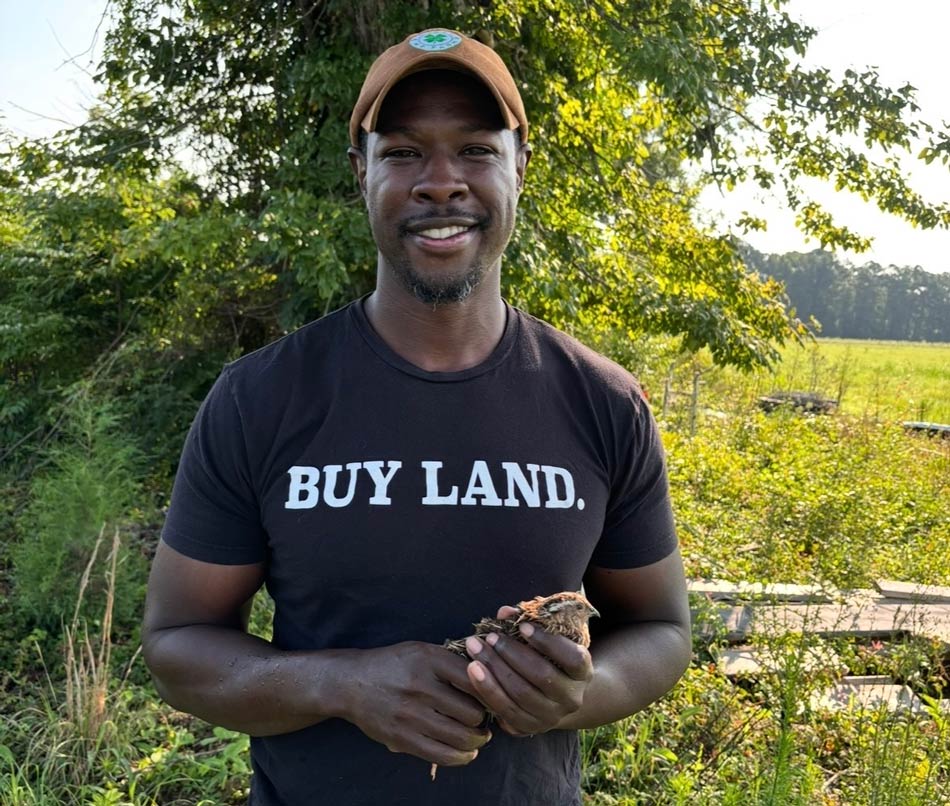
Quail play an important role in making agriculture more accessible because they have a low barrier to entry, require minimal space, and allow people to begin producing food efficiently.
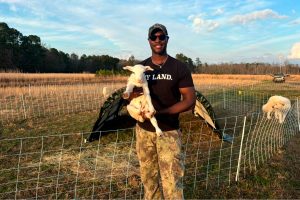
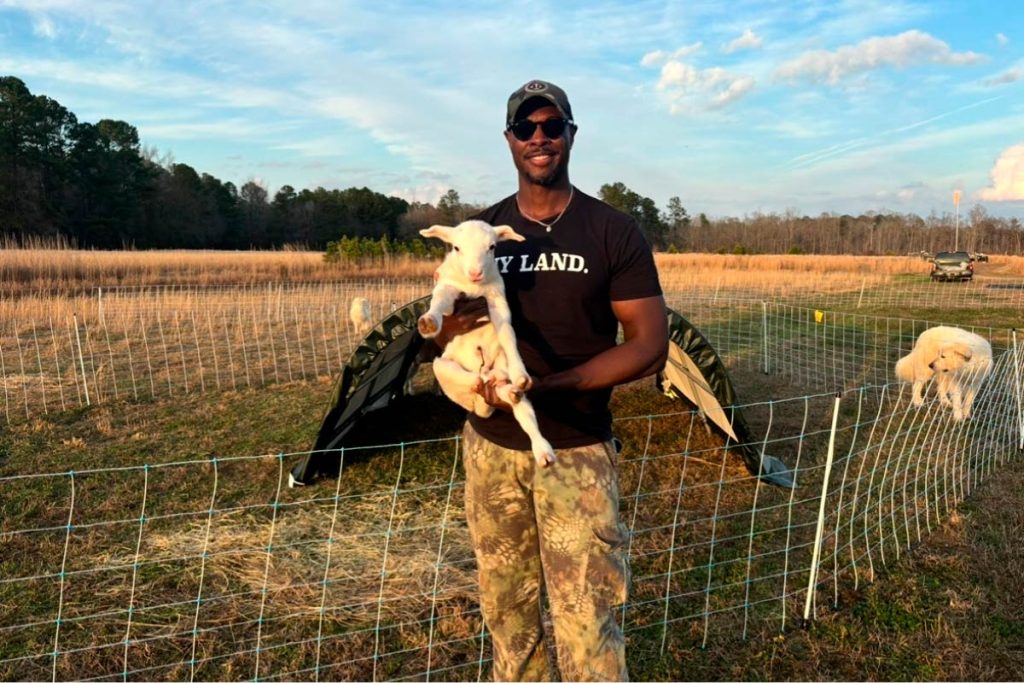
Today, Davian owns and operates McKnight Farms, where his primary focus is raising Coturnix quail. He also raises cattle, Katahdin sheep, rabbits, and Muscovy ducks as part of a diversified agricultural system. Each species contributes to the overall function of the farm, supporting food production while improving the soil health and long-term sustainability.
“My focus is on regenerative agriculture, using livestock and land management practices to produce food while improving the land that supports it,” said Davian.
What Davian enjoys the most about farming is the responsibility. The land reflects his decisions and the animals depend on his consistency. Farming requires discipline, patience, and problem-solving. It also provides clarity and purpose because the results are tied directly to his efforts.
He also enjoys building systems – creating concepts and standard operating procedures that allow knowledge to be transferred. Davian often thinks about the farmers that he will never meet. The systems built today can help someone else begin tomorrow.
Understanding agriculture reinforced something even more important for Davian. The food system depends entirely on those willing to produce. The question is not simply whether the food system is fragile, but whether there are enough producers to sustain it.
“I stayed in farming because food is not going out of style anytime soon,” said Davian.
Being a Black farmer in the United States is something that Davian takes pride in because it represents continuity and progress.
“My grandfather worked land he did not own and grew crops that he did not control,” said Davian. “Today, I own and operate a farm of my own. That progression represents responsibility – to preserve the land, produce food, and ensure that agriculture remains accessible for future generations.”
There are challenges in agriculture, and while some Davian have not personally experienced – or did not allow to hinder him – he understands that barriers exist for many. Such barriers include access to land, capital, and knowledge can determine whether someone is able to begin.
It’s this understanding that reinforces the importance of building systems and creating pathways so others can enter agriculture with clarity and confidence.
For other Black beginning farmers and ranchers that are interested in agriculture, Davian’s advice is simple: Give a man a fish and he eats for a day. Teach a man to fish and he eats for a lifetime. But teach a man to build a fishing pond, and he feeds generations.
“Agriculture provides that opportunity,” said Davian. “It allows individuals not only to sustain themselves, but to create something that endures.”
As President of the South Carolina chapter of the Farmer Veteran Coalition, Davian works to support veterans and members of his community who are interested in agriculture and help others discover agriculture as a path forward.
Davian is also a 2024 Fellowship Fund awardee, receiving a $1,000 gift card from Tractor Supply Company. He used those funds to purchase goat fencing and hog panels, along with t-posts. These improvements to his farm help to significantly enhance his operations.
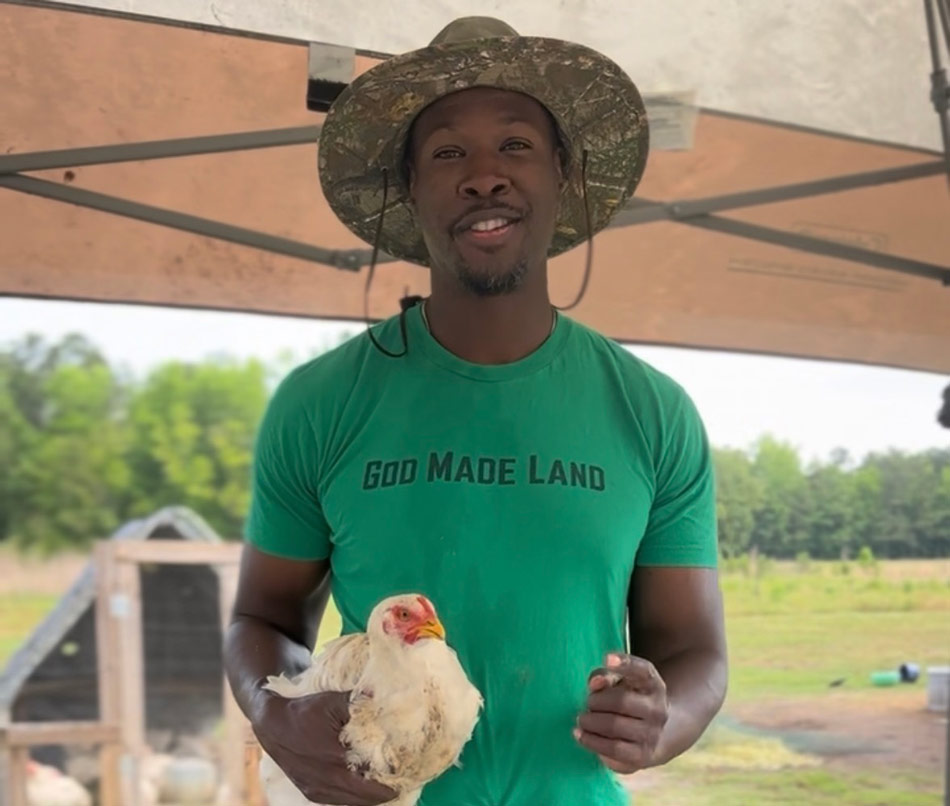
Through McKnight Farms and his social media platforms, he shares the realities of farming with more than 240,000 people, demonstrating that agriculture remains accessible.
“The long-term purpose of McKnight Farms is to provide a template – demonstrating that agriculture is still accessible and that land, when properly stewarded, can produce food, create opportunity, and support future generations,” said Davian.
To learn more about Davian and McKnight Farms, you can follow him on Instagram and TikTok.