For farmers and ranchers, stewardship and profitability cannot be separated. We can care deeply about the land, but an agricultural operation must also generate enough income to survive. That is especially important for beginning farmers and ranchers, including the veterans we serve at the Farmer Veteran Coalition, who are building businesses while facing high input costs, unpredictable weather, limited access to land and capital, and increasingly narrow operating margins.
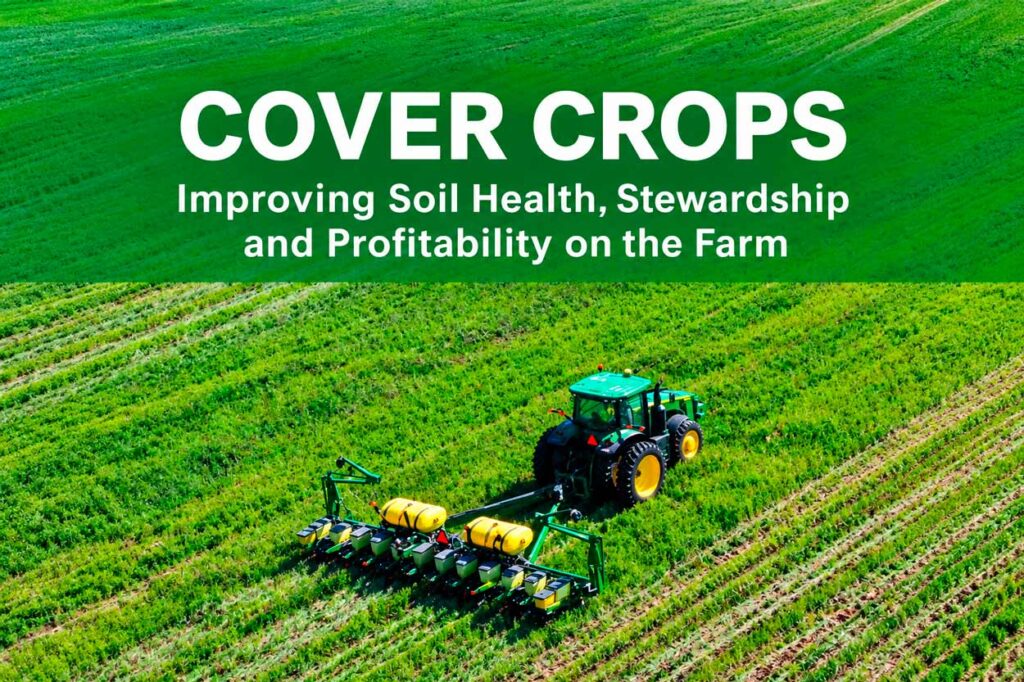
That is why the newly released second edition of Robert L. Myers’ Cover Crops: Improving Soil Health, Stewardship and Profitability on the Farm deserves attention. Published by Sustainable Agriculture Research and Education (SARE) with support from USDA’s National Institute of Food and Agriculture, the handbook makes a compelling case that cover crops should be viewed not simply as a conservation practice, but as a farm-management tool.
The concept is straightforward. Cover crops are plants grown primarily to protect and improve soil when a cash crop is not growing. Cereal rye is the most widely used, but farmers can choose from dozens of species, including clovers, vetch, peas, oats, wheat, barley, radishes, turnips, buckwheat and others. The right choice depends on the farmer’s location, rotation and objectives.
What makes cover crops particularly interesting is the number of problems they can address simultaneously.
Healthy soil is living soil. When fields sit bare for months, we lose an opportunity to capture sunlight and keep living roots feeding the biological activity beneath our feet. Cover crops extend that growing period. Their roots support fungi, bacteria, earthworms and other organisms that help cycle nutrients, build organic matter and improve soil structure. That matters when the weather refuses to cooperate, which farmers know it frequently does.
Healthy soil can absorb rainfall rather than allowing water, nutrients and topsoil to run off. Increased organic matter also improves the soil’s ability to retain moisture. Cover crop residue can reduce evaporation and moderate soil temperature, while roots and earthworm channels can improve water infiltration and create pathways for future crop roots.
For producers confronting drought one year and excessive rainfall the next, those aren’t abstract environmental benefits. They are risk-management tools.
But farmers understandably ask another question, “will it pay?”
The handbook argues that cover-crop economics must be evaluated across the entire farming system and over several years. Returns may come through reduced fertilizer needs, improved weed management, reduced compaction, grazing opportunities, conservation incentives, better field access and, over time, improved yields.
One example is nutrient management. Legume cover crops can fix nitrogen, while other covers capture nutrients that might otherwise leave a field through runoff or leaching. Instead of watching valuable nutrients disappear from the farm, producers have an opportunity to keep more of them within the root zone for future crops.
Cover crops can also become forage. The handbook describes grazing as one of the strongest opportunities for improving the economics of cover crops, particularly once fencing and water infrastructure are established. Integrating livestock can turn what might otherwise be considered a conservation expense into another productive component of the farm.
None of this means cover crops are effortless. Species selection matters. Planting dates matter. Seeding rates, equipment, termination timing, crop rotation, rainfall and nutrient management matter. A system that works beautifully in Iowa may need significant adjustment in Texas, Virginia or California. The handbook appropriately encourages farmers to experiment, learn from experienced producers and start on a manageable scale rather than immediately converting an entire operation.
That approach resonates with us. Veterans understand that accomplishing a mission requires preparation, adaptability and a willingness to learn from experience. Agriculture demands those same qualities. Trying a new production practice does not require betting the farm. It can begin with one field, a defined objective and a plan to measure the results.
USDA can also help producers manage that transition. The handbook identifies the Natural Resources Conservation Service’s (NRCS) Environmental Quality Incentives Program (EQIP) and Conservation Stewardship Program (CSP) as two important avenues through which farmers may receive assistance for cover crops and related conservation practices.
Perhaps the most important message, however, is about time. We often evaluate agriculture one crop year at a time because bills, operating loans and markets force us to. Soil does not operate on an annual balance sheet. Improvements in organic matter, biological activity, soil structure and water-holding capacity accumulate over years.
That makes cover crops an investment – not only in next year’s crop, but in the productive capacity of the farm itself.
For the Farmer Veteran Coalition, that conversation is particularly meaningful. We want veterans entering agriculture to build businesses that can withstand difficult years, remain economically viable and ultimately be passed to the next generation.
The goal should not simply be to farm the land we have today. It should be to leave it more productive, more resilient and more valuable than we found it. That is stewardship, and when stewardship strengthens the farmer’s bottom line, it is also good.
Learn more here: https://www.sare.org/resources/cover-crop-book/