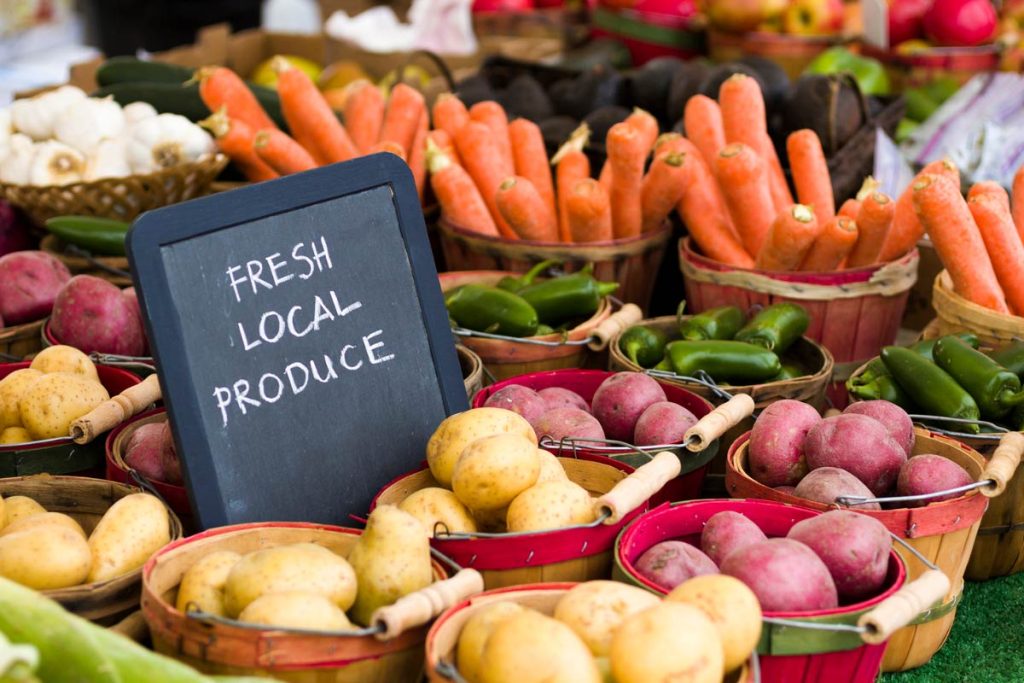
If the local food landscape feels different this year, that’s because it is.
Over the past several seasons, many Farmer Veterans have built real momentum through local and regional markets. Farm-to-school contracts have expanded, food hubs have grown, institutions leaned into regional sourcing, and consumers actively sought out products with a story and a face behind them.
For veteran-owned farms and ranches, those shifts created meaningful opportunities, allowed smaller operations to scale strategically, rewarded transparency and mission-driven branding, and offered entry points that did not require competing with multinational commodity systems.
Now, in 2026, we see the environment is evolving again.
Funding streams are adjusting, procurement priorities are being restructured in some regions, and processing capacity continues to shape what is possible. Buyers are raising expectations around compliance and reliability. The opportunity has not vanished, but the landscape is evolving and experience has taught us that when conditions shift, preparation becomes your greatest advantage.
Demand Remains Strong – Even as Procurement Evolves
In recent years, institutional purchasing programs have opened doors for many veteran producers. Schools, hospitals, and other public institutions have made deliberate efforts to source regionally. This momentum has helped farms invest in infrastructure, expand herds, improve packaging, and formalize food safety systems.
Today, some of those purchasing channels are experiencing budget adjustments or structural changes. In certain areas, contracts are more competitive. In others, timelines are slower. Some producers are seeing reduced order volumes while others are waiting longer for renewals, which can make it feel unsettling.
But here is what has not changed: institutions still serve meals every day. Children still eat lunch at school, patients rely on hospital kitchens and military installations need a dependable food supply.
The difference is that buyers are being asked to justify spending more carefully. That means they are looking closely at consistency, professionalism, and risk management.
Farmer Veterans understand those concepts deeply. Clear communication, operational discipline, and reliability are not abstract values – they are lived experience. In this moment, those qualities matter as much as price.
The farms that maintain relationships, communicate early, and demonstrate readiness are the ones most likely to remain steady partners in uncertain procurement environments.
Food Hubs Are Adjusting to the Same Pressures
Food hubs have long provided a bridge between small producers and larger buyers. For many Farmer Veterans, they have been an accessible way to enter wholesale markets without building distribution systems from scratch.
But hubs operate within the same economic realities as farms. Rising costs, funding shifts, and changing buyer demand are influencing how they structure fees, supplier requirements, and service areas. Some producers are seeing adjustments in margins. Others are navigating new delivery standards or revised contract terms.
Operations are having conversations with their aggregation partners. They are understanding where their revenue truly comes from and are ensuring that one relationship does not account for the majority of their cash flow.
Higher Expectations Are Opening Doors for Prepared Producers
One of the clearest trends in 2026 is the rising expectation around compliance and consistency.
Being local is valuable and being veteran-owned is meaningful. Having a compelling story opens doors. But buyers – especially institutional and retail partners – want more than narratives, they want documentation. They want reliable delivery schedules, packaging that holds up on shelves, and production forecasts that align with purchase orders.
For some small operations, that level of scrutiny can feel overwhelming, but it also levels the playing field. When standards are clear, disciplined farms stand out.
Veteran producers often thrive in structured environments. When expectations are clearly defined, well-built systems have the opportunity to perform at their best. Farms that invest in food safety training, operational planning, and professional presentation are finding that buyers respond positively.
Infrastructure Is Unlocking Growth Potential
For livestock producers in particular, processing capacity remains one of the most important variables in the entire equation.
In some regions, investments in small and mid-sized processing facilities have eased pressure. In others, bottlenecks persist. Slaughter appointments can be months out. Inspection status determines which markets are accessible and labeling approvals can slow expansion plans. No matter how strong demand is, growth depends on infrastructure.
Farmer Veterans who are aligning production with confirmed processing capacity are navigating this environment more smoothly. Those who are securing dates early, understanding inspection requirements, and coordinating packaging and labeling in
advance are avoiding costly disruptions. Ambition is essential, but alignment is critical.
Direct-to-Consumer Remains a Strong Foundation
Farmers markets, CSA programs, on-farm stores, and online sales continue to provide stability for many Farmer Veterans.
Direct-to-consumer sales offer margin control and personal connection. Customers appreciate knowing the producer and respond to authenticity. For veteran-owned brands, that connection often runs deep.
But direct sales require time and presence. They demand marketing effort, communication, and logistical coordination. Not every operation can, or should, rely exclusively on that channel.
The most stable farms today are balancing. They maintain direct customer relationships while carefully layering in wholesale or institutional partnerships. They treat diversification as a form of insurance rather than expansion for expansion’s sake.
I have witnessed this firsthand as an agricultural lender for 24 years. Balance provides room to breathe when one channel tightens.
Strong Stories Paired with Strong Systems Drive Growth
The story of service, transition, and purpose behind veteran-owned farms resonates strongly in local markets. It builds loyalty and opens conversations. However, sustaining growth requires systems behind the story.
Buyers are looking at packaging consistency, evaluating pricing structures, and are assessing whether a supplier can meet demand across multiple months without interruption.
Professionalism does not diminish authenticity, but strengthens it. When mission and execution align, veteran-owned farms become long-term partners.
The Bigger Picture: Positioned for Long-Term Success
The local food movement is not fading and consumer interest in regional sourcing remains strong. Institutions still value dependable suppliers and communities continue to prioritize resilient food systems.
What is changing is the predictability of funding streams and the structure surrounding procurement and Farmer Veterans are uniquely equipped for this moment.
Resilience, readiness, and contingency planning are not new concepts. In agriculture, those principles translate into diversified revenue streams, strong recordkeeping, proactive communication, and steady relationship-building.
The farms that are paying attention now are positioning themselves for stability for the long-term.
Staying Engaged Makes a Difference
Policy shifts and procurement decisions directly affect farm revenue. When veteran producers share what they are experiencing – whether challenges or successes – it shapes FVC’s advocacy and program design. Email us at support@farmvetco.org and we can provide you with information and tools to assist you through market changes. Past feedback has led to the development of the HBH Retail Ready Program that we will be rolling out this year.
If a contract changes unexpectedly, that information matters. So does if processing capacity limits growth and if a regional market is thriving. Engagement ensures that Farmer Veterans are visible in conversations that shape the future of local food systems.
Looking Forward
Farmer Veterans have already demonstrated the ability to navigate complex transitions. The agricultural landscape may be shifting, but adaptability is not new territory. Local food markets are changing and expectations are rising, but buyers still need dependable partners.
The farms that will thrive in this environment are not necessarily the largest. They are those that are prepared, diversified, disciplined, and communicative. In other words, they are built on the same principles that define strong leadership.
This is a moment for steady growth and smart positioning. A time to plan intentionally, strengthen partnerships, and build lasting resilience. Remember that FVC is only a phone call away to help you with next steps. Call us at 855-FVC-FARM (855-382-3276)
For those of you still dealing with frigid temperatures, hold on! Spring is just a month away!